
- Deep Tissue / Relaxation in Airdrie
- Group / Couple Massage in Airdrie
- Acupuncture in Airdrie
- Cosmetic Acupuncture in Airdrie
- TMJ Massage Therapy in Airdrie
- Cupping + Massage in Airdrie
- Prenatal Massage in Airdrie
- Lymphatic Drainage in Airdrie
- Children Massage in Airdrie
- MVA in Airdrie
- Reflexology / Foot Massage in Airdrie
- Reiki + Massage in Airdrie
Acupuncture in Airdrie
Pain Relief, Wellness & Pelvic Floor Therapy
Acupuncture is a safe and effective treatment rooted in Traditional Chinese Medicine. Using ultra-fine needles, it helps rebalance the body’s energy (Qi), relieve pain, improve function, and support overall wellness.
Conditions Treated:
- Arthritis
- Back, neck, knee, and muscle pain
- Headaches and migraines
- Menstrual cramps
- Sports injuries
- Pelvic Floor
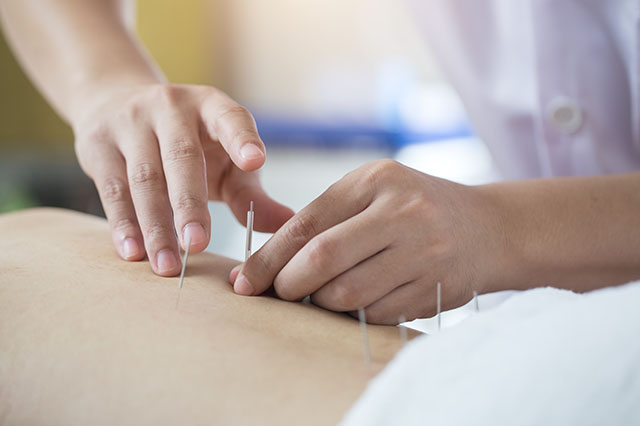
Pelvic Floor Acupuncture involves needling local soft tissue and ligaments in the areas that have a direct effect on the pelvic floor. Acupuncture helps by releasing taut muscle tissue and fascial adhesions to create more space and range of motion in the tissue. Thus, decreasing pain and improving quality of life.
- Chronic constipation
- Bladder control problems such as urgency or dribbling
- Urinary and fecal incontinence
- Diffuse gluteal pain
- Diffuse lower extremity pain
- Dyspareunia, or pain with intercourse
- Dysmenorrhea (painful periods)
- Endometriosis
- Vulvodynia (causes severe pain, burning, and stinging of the vulva)
- Pain from an episiotomy or scarring
- Pain with urination or defecation
- Prolapse of pelvic and rectal organ
- Scarring from C-Section or other abdominal surgeries
- Tailbone pain
- Pudendal Neuralgia
In women pelvic floor dysfunction can happen:
During pregnancy such as pubic symphysis pain, Pain felt in the front middle of the pubic bone, in the lower back on one or both sides, and/or in the perineum. During history of multiple miscarriages or traumatic births. After surgical intervention such as hysterectomy or laparoscopic surgeries.
Pelvic Floor Acupuncture – Men
- Chronic constipation
- Straining or pain during bowel movements, prolapse
- Lower back pain
- Erectile dysfunction
- Peyronies
- Painful erection, or Dysorgasmia (painful ejaculation)
- Testicular, groin or hip pain, pelvic or tailbone pain
- Urinary and fecal frequency and/or incontinence
- Pain with urination or defecation
- Diffuse gluteal pain & lower extremity pain
- Tailbone Pain
Sports related injuries. Heavy lifting and high impact exercise. Sitting too long. After surgical intervention such as abdominal or laparoscopic surgeries. Long term cough (smokers cough or other respiratory conditions).
Treatment helps restore function, reduce pain, and improve quality of life.

 Tel: 587 360-1314
 info@infinitymassage.ca